Jeffrey R. Smith
  • Home
  • Research
  • Policy
  • Outreach
  • Teaching
  • Publications
  • CV
Picture
Biodiversity Patterns and their Drivers
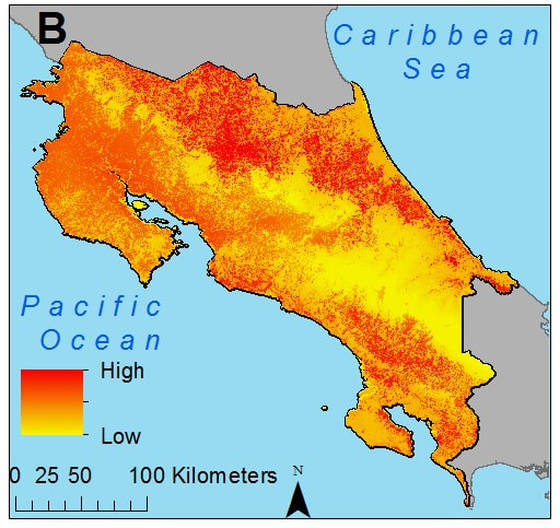
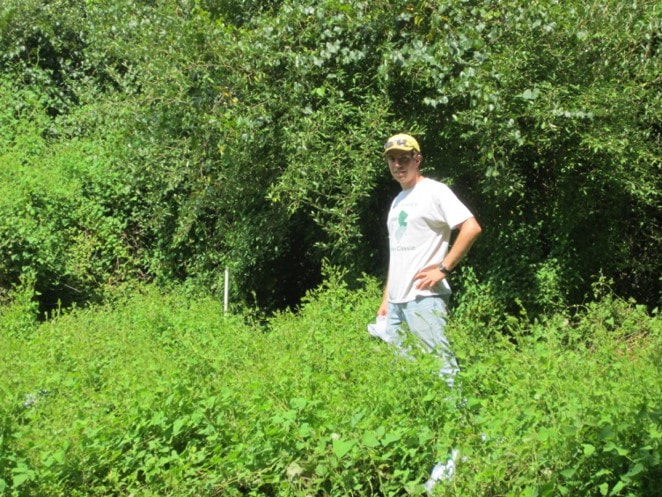
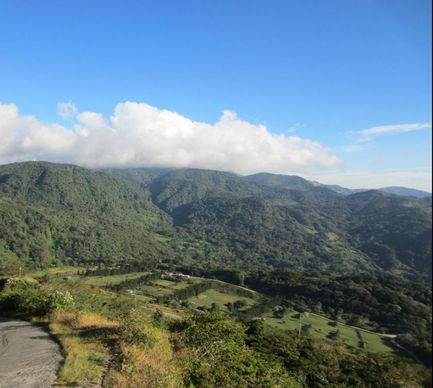
I am first and foremost a biogeographer. Trained as a field ecologist, I have consistently sought to answer why we find species in the places we do, and just as importantly why we don't find them elsewhere. I have conducted empirical field work with insects in the Mid-Atlantic United States, New England, and Costa Rica and have collaborated extensively with bird researchers throughout Costa Rica. My research focuses on how land-use patterns and climate affect the distribution of species, with a focus on forecasting how biodiversity will shift with increasing rates of land-use intensification and climate change. I compliment the collection of primary field data with spatial modelling techniques which range from local (e.g. landscape composition surrounding fields) to national (e.g. distribution of birds across Costa Rica) and finally to global scales (e.g. the distribution of global ecoregions). For these projects I work extensively with large biodiversity databases, combining them with remote sensing data to derive novel ecological insights that can help guide conservation decisions. 

Picture
Nature-Based Climate Solutions
Nature-based climate solutions, along with the broader set of land-based climate change mitigation measures, fascinate me for two reasons. From a scientific perspective, they are unique in their potential dual impacts on biodiversity: both altering the habitat available to species and helping to mitigate climate change, in turn reducing the potential harm to biodiversity. From a policy perspective, since these solutions underpin many national commitments to net zero emissions they are likely to be deployed at scale, leading to real world consequences for biodiversity. I work to model the potential impacts of deploying these strategies on biodiversity, accounting for both the direct effects of habitat conversion and the indirect effects of climate change mitigation. These analyses require us to combine disparate datasets to understand both the potential distribution of these land-based mitigation measures and their biodiversity impacts. We are currently ground-truthing this modeling work with a meta-analysis of primary studies which mesure local changes in species richness as a result of their deployment.  

Picture
Nature's Contributions to People
Human well-being is fundamentally linked to the health of ecosystems both locally and globally. Natural areas provide us with key ecosystem services including climate regulation, provisioning of fresh drinking water, food production, opportunities for recreation, and countless others. Many of these services, often called nature's contributions to people, are mediated through the type and diversity of species in a given place. I work on interdisciplinary teams to model the links between biodiversity and ecosystem services, to help ensure the sustainable development decisions truly benefit people and nature. For example, I have worked with the government of Costa Rica to model the distribution of biodivderfisty throughout Costa Rica, and how biodiversity in turn benefits the economy by driving tourism. We've also examined how maintaining forested ecosystems throughout the country can reduce the prevalence of mosquito species known to be vectors of diseases such as dengue, chikungunya, zika.   
Powered by Create your own unique website with customizable templates.
  • Home
  • Research
  • Policy
  • Outreach
  • Teaching
  • Publications
  • CV